Showing posts with label STEM. Show all posts

Chocolate Chip Cookie Science - A Tasty Experiment!

  Chocolate chip cookies come in all kinds of textures, shapes, and sizes - not to mention the ways to change up the add-ins, chips, chunks,...


Chocolate chip cookies come in all kinds of textures, shapes, and sizes - not to mention the ways to change up the add-ins, chips, chunks, white, milk, dark chocolate, M&Ms...but what happens when you don't have enough cookies for all of your friends?

This post contains affiliate links. As an Amazon Associate, I may earn a commission on qualifying purchases - at zero cost to you.


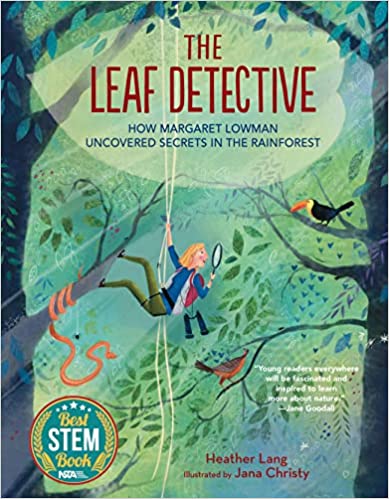
'The Leaf Detective' - Read and Rise March 2020

  In honor of International Day of Women and Girls in Science this year, we got a big stack of picture books about female scientists from th...


In honor of International Day of Women and Girls in Science this year, we got a big stack of picture books about female scientists from the library. Out 14 amazing women, I had only heard of 2 of them! One of the new scientists I was introduced to was Dr. Meg Lowman. Her story is amazing! She was the first person to actually climb up into the rainforest canopy to study wildlife and helped create canopy walkways so more people could study and experience the wonder of the canopy!

This post contains affiliate links. As an Amazon Associate, I may earn a commission on qualifying purchases - at zero cost to you.


'The Rescuer of Tiny Creatures' and a Super STEM Spotlight

  I'm very excited about today's post because not only do I get to share a wonderful story with you, but I also have an interview wi...


I'm very excited about today's post because not only do I get to share a wonderful story with you, but I also have an interview with an amazing female in STEM to share as well! Let's check out the book first and then you can meet Ms. Valente!

This post contains affiliate links. As an Amazon Associate, I may earn a commission on qualifying purchases - at zero cost to you.


Paleontologist Pretend Play - Frozen Fossils

  There are several different kinds of fossils , but the coolest might just be frozen fossils. Frozen fossils occur when an animal becomes e...


There are several different kinds of fossils, but the coolest might just be frozen fossils. Frozen fossils occur when an animal becomes entrapped somewhere that is freezing. This happened most often during the Ice Age - makes sense since it was freezing everywhere!

Recently million year old perfectly preserved plants frozen under nearly a mile of ice were discovered in Greenland. And several years ago, melting pack ice in Antarctica uncovered the frozen bodies of Adelie penguins from 800 years ago!

Your kids can uncover their own frozen fossils in this fun and chilly activity - perfect for the hot days of summer! It does require planning ahead, but it's very simple. Grab a large plastic container, fill it about 1/4 of the way up (our container is about the size of a 13x9" baking dish and I filled it with 6 cups of water). Toss in some dinosaurs, prehistoric creatures, shells, leaves, and anything else you think will be cool and put the container in the freezer for a couple of hours until it's frozen solid. At that point, add more water to fill the container halfway (I added 6 more cups) and put back in the freezer overnight. I freeze the water in two parts to make sure things are frozen in the middle of the ice and not just at the top and bottom.


When you're ready to excavate, flip the ice block out into a water table, underbed storage bin, or large foil tray. Your kids will need real tools (and close supervision!) to chip away at the ice block or you can give them warm water and salt so they can melt the ice. We decided to chip away at the ice with the kids' hammers and screwdrivers.


The ice was really stuck to this little guy so Lil C put him out in the sun to finish thawing.


They chipped and broke the ice until they freed all the creatures that were trapped in it. And then the resulting water and ice chunks inspired Squidgy to set up a slushie stand! 


I hope you enjoy all our paleontologist pretend play activities! In case you missed them, be sure to check out:


Additional sources: "What is a Frozen Fossil"

Paleontologist Pretend Play - Dinosaur Fossil Excavation

This is a super easy DIY dinosaur excavation that uses dried oobleck to encase the dinosaurs/fossils. For instructions on how to make the oo...


This is a super easy DIY dinosaur excavation that uses dried oobleck to encase the dinosaurs/fossils. For instructions on how to make the oobleck, check out my sensory play tar pit post. After you've made the oobleck, drop in some dinosaur toys, prehistoric creatures, bug toys, shells, rocks, and/or shark teeth. 

Let the mixture dry for a day or two - if you can put it out in the sun it will help it dry faster. Once it looks completely dry and starts cracking a bit, gently flip it out onto a tray. We got the tray in the above photo in the dollar spot at Target several years ago but you could always just use a large foil pan. Then arm your kids with a wooden hammer and chisel, a paintbrush, and a magnifying glass and let them excavate! (If you don't have a wooden hammer and chisel, random play dough tools can do the job as well. The materials cracks apart really easily so you don't really need anything specific.)


Uncovering treasures hidden inside!


Brushing off the fossil very carefully and showing Daddy what he uncovered!


I put the tent up over them to shade them from the sun and because it made it feel even more like a dig site!


After everything had been excavated, Lil C and Squidgy had a great time pulverizing the dried oobleck into dust and they played in it for hours! I had other activities ready to go but they spent the whole afternoon here, turning the oobleck powder into a small world for their creatures. And then Lil C had the idea to add water back to the powder, creating oobleck once more! Now the whole process has begun again!

'Addison Rue is a Paleontologist' Book Review plus Dinosaur Tar Pit Sensory Play

  Do you love dinosaurs and other prehistoric creatures? Do you think it would be cool to discover the fossil of a never-before-seen creatur...


Do you love dinosaurs and other prehistoric creatures? Do you think it would be cool to discover the fossil of a never-before-seen creature? Or maybe solve the mystery of why the dinosaurs all died? Have you ever dreamt of being a paleontologist? Well, Addison Rue has. 

This post contains affiliate links. As an Amazon Associate, I may earn a commission on qualifying purchases - at zero cost to you.


In "Addison Rue is a Paleontologist" by Samantha Cruz - the first book of the series, "Addison Rue and the Big Dreaming Book" - Addison Rue drifts off to sleep and finds herself right in the middle of a dig site! She realizes that she is a paleontologist and as so it is her job to learn about the past by studying fossils. As luck would have it, there are bones buried in her dig site! What does she uncover? You'll have to pick up this book to find out!

As homeschoolers, books like "Addison Rue is a Paleontologist" are fantastic for introducing unit study topics and building interest. After reading the story with my children (author Samantha Cruz kindly gifted us a digital copy for review), we were ready to become paleontologists. Or, almost ready...

Before we could excavate dinosaur fossils, we had to help them get trapped in tar pits where they could be preserved so as paleontologists we could uncover them millions of years later. To make our tar pits, we turned to our favorite non-Newtonian substance - oobleck.

Tar Pit Oobleck

Materials:
- cornstarch
- used coffee grounds
- water
- (optional) coffee

Directions:
1. Pour cornstarch into plastic bin. We used cold cuts containers and poured 2 cups of cornstarch into each one. (I HIGHLY recommend making a separate bin for each child, it makes things so much simpler.)


2. Add some used coffee grounds. We added about a 1/4 cup to each bin.


3. Add water (and coffee, if desired). I've often read a good ratio of cornstarch to water is 2:1 so we added 1 cup of liquid. However, our oobleck was too runny and we needed to add more cornstarch. Next time we do it I would start with a 1/2 cup of liquid and add a tablespoon at a time until we get the right consistency.


4. Stir it all together and start playing! We collected toy dinosaurs and prehistoric creatures as well as some bugs. As soon as you drop one onto the oobleck it slowly starts sinking in!


Since it's summer, this activity was definitely best done outside - much easier cleanup! I also put out a pot of water for rinsing hands/toys and a washcloth for each of them for drying. Lil C and Squidgy had tons of fun burying the animals in the "tar pits" and just messing around with the oobleck. We were definitely out there for a couple of hours at least.


When we were all done playing for the day, we dropped a bunch of animals into the oobleck (I also added a couple rocks, shells, and shark teeth) and put the bins aside to dry for a full day or two. Come back tomorrow to find out what we did next!

Story Based STEAM - 'Oil Spill'

  During our unit on coral reefs and the ocean, we learned that oil spills are a constant problem! We decided to investigate to figure out w...


During our unit on coral reefs and the ocean, we learned that oil spills are a constant problem! We decided to investigate to figure out why they were such a big problem and what we could do to help.


This post contains affiliate links. As an Amazon Associate, I may earn a commission on qualifying purchases - at zero cost to you.


We read "Oil Spill" by Melvin Berger to find out more about how oil spills happen and how they affect plants and wildlife. "Oil Spill" also explains how experts clean up the ocean and affected animals after oil spills and provides some tips on how you can help.

We like to get our hands involved in our learning, so while I was reading the story, Lil C and Squidgy were creating their own mini oil spills.


I gave each of them a plastic shoebox filled with some toy ocean animals, a few rocks and shells, and some cleaning supplies. We removed the cleaning supplies and filled the bin with an inch or two of water.


Then I gave them a "boat" (I didn't have two small toy boats so we used Hatchimal eggs) and a little bottle of "crude oil" (cooking oil mixed with a bit of cocoa powder). 


They carefully poured the oil mixture into their "boat" and then spilled the oil! They soon discovered that even though it was floating in clumps on the surface, it was not easy to clean up!


To assist in their cleanup efforts, they were each given 5 cotton balls, 3 sponge strips, a spoon, and a toothbrush. Lil C determined that soaking up the oil with the cotton balls and sponges worked better than trying to scoop with the spoon and the toothbrush didn't seem to be helpful at all! In spite of their best efforts, there was still a good amount of oil left in the water and they also discovered that everything IN the water was coated with oil!


The last part of our activity was to clean the animals (and all the other oily things while we were at it) so we could release them back into the wild! This was where the toothbrush came in handy, scrubbing the animals clean with some nice soapy water. 

In the end, we learned how challenging it can be to clean up an oil spill and that the best way to help was to try and limit our crude oil use by cutting power use at home (or investing in clean energy), limiting how much we drive, and avoid single use plastics as some of them are made from oil-based plastics. 


How to Grow Beans in a Jar

  This is probably one of my favorite activities to do with kids when we are learning about plants and how they grow. Growing beans in a jar...


This is probably one of my favorite activities to do with kids when we are learning about plants and how they grow. Growing beans in a jar lets you see up close how a little seed can turn into a large plant!

This activity pairs really well with the story, "From Seed to Plant" by Gail Gibbons. There are actually instructions on how to grow your own bean at the back of the book!


We use paper towels rather than black paper - I'm thinking the paper was used to have a better contrast between your bean and the background so you can see the growth better. But we've always had good luck with paper towels! Keep reading to see how we set up our experiment.

Step 1: This year we used 8oz wide mouth mason jars. I layered 2 half size paper towels and folded them down about 2/3 of the way so they'd be as tall as the jars.


Step 2: Roll up the paper towels.


Step 3: Put the rolled up paper towel in the jar, spread it out, and pour in 1/4-1/3 cup of water. You want enough water so the paper towels can absorb it and be soaked, but you don't want the water level to be so high that the beans are sitting in the water. Once the paper towels are soaked, the water level shouldn't be higher than an inch or so. If there's too much, pour a little out before you add the beans. 


Step 4: Carefully slide some beans about halfway down between the paper towel and glass. We used pinto, chickpea, and black beans. I labeled the sides of the jar with each child's initial and the date we put the beans in so we'd know whose it whose and how long they've been growing.


Step 5: Watch them grow! A couple of the beans sprouted tiny roots by the end of the next day. This is what we have after 5 days! 


The jars don't have to be placed in a sunny spot, all you have to do is make sure there is a little bit of water in the bottom of the jar so the paper towel stays soaked. It's an easy job for the kids because they can glance in the jar every day and see if it needs a little extra water. Once the beans have grown out of the jar, they will need sun and soil to keep growing strong. So at that point you can either plant them or toss them. 

Feel free to repeat the activity as many times as your child wants! Happy sprouting!


'Emma Ren: Robot Engineer' Book Review

  When I saw this book on Kickstarter, my first thoughts were "Ooh! I'll have to add this book to my list when I do my women and gi...


When I saw this book on Kickstarter, my first thoughts were "Ooh! I'll have to add this book to my list when I do my women and girls in science post next February!" It also gave me the idea to do a series of female-focused Story-Based STEAM activities leading up to International Women and Girls in Science Day 2022. But I was getting way ahead of myself because the book was not even available for purchase yet and February 2022 is a long way away!

This post contains affiliate links. As an Amazon Associate, I may earn a commission on qualifying purchases - at zero cost to you.


What I was able to do in the meantime was get in touch with the author, Jenny Lu, and she was gracious enough to share her storyboard with me so I could read the story with a few of my Cardboard Kids. 

"Emma Ren: Robot Engineer" is a story about Emma, a young girl who loves building things and tinkering with her father. One day, her teacher announces that they will be building robots in teams and battling them at the end of the week. Emma is really excited about this until her teacher pairs her with a boy who thinks girls can't build robots. Emma shows a lot of poise and restraint and remains calm and kind while showing the boy that girls can, in fact, be robot engineers.

I love the pictures! - Ani, 3

Initially, I wasn't crazy about the boy in Emma's class who insisted that girls didn't know anything about robots. I try to avoid negative talk like that and just focus on showing my children who they can be. However, after I thought about it, I feel like it is beneficial to have a book like this mixed in with all the rest because it encourages dialogue about what girls - and boys - can or can't do. After reading it with my children, we talked about how even though in reality there is no limit to what you can or can't do, some people have old-fashioned and outdated notions of what are appropriate roles for girls and boys. The story also showed us a great way respond if we do ever come across anyone who says we can't do something. Emma didn't let anger take over and she kept calm and respectful, while standing up for herself.

I liked how Emma proved the boy wrong! I also loved the robot competition, I couldn't wait to see what happened! - Emma, 6

I asked my daughter how she would respond if someone told her that girls don't play Minecraft and this is the response I got:

I'd say, have you seen me play?!?! Girls can do anything! - Lil C, 9


Squidgy didn't have much to say about the story, but he did grab his tablet and start playing CATS: Crash Arena Turbo Stars before I even finished reading the story. The kids have the game on their Amazon Fire Tablets (we have the Amazon Kids+ subscription so they have access to TONS of games and books). Basically, you build vehicles that you can customize with various wheels and attachments like drills, scoops, claws, and saws and then you battle another vehicle and see who is left standing at the end. So I think Squidgy enjoyed the battle bot part of the story. All the children expressed interest in building robots, especially battle bots, in the future so I do envision this book to be a great one to pair with a variety of robot STEAM activities! I can't wait to try out all my ideas and share them!


'Birds Make Nests' - Read and Rise April 2021

  This month we are celebrating the earth and the amazing plants and creatures out there! First up, birds! Once spring comes, there are bird...


This month we are celebrating the earth and the amazing plants and creatures out there! First up, birds! Once spring comes, there are birds in our yard tweeting and chirping and singing almost all day. We love watching them, identifying ones we're unfamiliar with, and trying to figure out which bird makes which call. Lil C especially loves it once the summer rolls around and we can see all the kid birds around the yard. Last year there were a bunch of kid robins and 3 kid cardinals that we'd always see together.

Build a Nest STEM Activity with 'The Perfect Nest'

We've been talking about birds all week, and observing the many birds in our yard. We collected a variety of nesting materials and left ...


We've been talking about birds all week, and observing the many birds in our yard. We collected a variety of nesting materials and left it outside for the birds, but unfortunately no one seemed to want anything from our pile! To see what we collected for the birds, check out my "Birds Make Nests" post.


Story Based STEAM - 'The Water Princess' and 'Nya's Long Walk'

Today I have two books and two STEAM activities that are both related to water, specifically speaking - drinking water. We all need water to...


Today I have two books and two STEAM activities that are both related to water, specifically speaking - drinking water. We all need water to survive - lots of water! In case you missed it, here's my Read and Rise post featuring "A Cool Drink of Water" and the importance of hydration. Despite our great need for clean water, about 1 in 3 people do not have access to clean water! (source: WHO). 

This post contains affiliate links. As an Amazon Associate, I may earn a commission on qualifying purchases - at zero cost to you.


'Mae Among the Stars' - Read and Rise

I have a bonus story this week, about another inspiring woman - the first Black woman to go to space, Mae Jemison! I love her so much becaus...


I have a bonus story this week, about another inspiring woman - the first Black woman to go to space, Mae Jemison! I love her so much because when she was little she wanted to travel into space and she made it happen, no matter what anyone else said! If you have a dream, I hope you find someone who will support you and help make your dream come true. As for the naysayers, just don't listen to them! This little interview with Mae where young girls get to ask her questions is so sweet and definitely worth a watch. 


Here's our bonus story:
"Mae Among the Stars" by Roda Ahmed


Activity: I thought since Mae got to blast off on a rocket up into space, it would fun to make our own rockets. But once I started searching for ideas, I found so many that I couldn't choose just one! So here are a few for you to choose from:


Last, but certainly not least, I had to include the link for NASA's 2020 Mission Perseverance Rover Landing Information because the Perseverance Rover is landing on Mars TOMORROW! Live show starts at 11:15AM PST/2:15PM EST. I have already set my alarm so we don't forget to tune in!

International Day of Women and Girls in Science 2021 - Let's Hear it for the Girls!

I believe that every child is a born scientist. They spend the first years of their lives observing and investigating the world around them!...

I believe that every child is a born scientist. They spend the first years of their lives observing and investigating the world around them! I think you'd be hard-pressed to find a baby who did not conduct the "what happens when I take this off my high chair tray, stretch my arm out to the side, and let go" experiment. And they don't stop after doing it once - they test it over and over to see if they get the same result each time! To build interest in science, all we have to do is nurture our children's natural curiosities. Provide things for them to observe with all senses, break apart, put together, combine, drop, throw, push, pull...I think you get the idea! Just remember, there's no right or wrong way to science - as long as everyone is safe, let them guide the experimentation!


So why the specific focus on girls and science? According to the National Center for Science and Engineering Statistics, women account for 52% of the college-educated workforce, but make up less than a third of the science and engineering workforce. Within the science and technology sector, women are more likely to be involved in life and social sciences and less likely to be engineers or computer, mathematical, and physical scientists. My goal today is to provide young girls everywhere with some real life role models from the science world as well as information on the different types of careers available in science and engineering. 


Life sciences (biology, botany, zoology, microbiology, physiology, biochemistry...)


Tanya Brown, Marine Biologist

I study how corals respond to disease. I do a combination of fieldwork (lots of SCUBA diving) and work in the lab doing molecular biology. I have always loved the water and was always that kid that was the first one in the water and the last one out and wanted to combine my love for the ocean with lab work. The biggest influence in going into science was my grandmother whose love for biology transferred to me. She would spend endless hours helping me understand biology and in the end her help made me pursue biology!


Tania Oberyszyn, Research Scientist

I went into science because I was always curious about how the body worked and what happens when parts of your body don't work the way they should. My research focused on trying to understand how sunlight causes skin cancer to develop and why men get more skin cancers than women. I loved being able to come up with different ideas about what could be happening and going into the laboratory and testing those ideas. I had a lot of amazing high school, college, and graduate students who worked with me in my laboratory and helped come up with ideas to test and then carried out the experiments. Some ideas work but many more don't. That is part of the scientific process.

For some reason some girls think that science and doing research is only for boys, but all types of science, whether it is biology, chemistry, or physics, is a wonderful opportunity for girls who are curious about the way the world works. Science is not just about working in the laboratory but also about sharing your results. You get to travel all over the world meeting with other scientists and sharing your findings. Like anything worthwhile, it takes work and perseverance but it also is just a lot of fun! 


Kristen Krip, Biochemistry Undergraduate
I always wanted to study science, but I never thought I was smart enough. I ended up getting a degree in English instead, but it wasn't what I wanted so, I went back to school. Ultimately, I want to do research someday, but dreams change as you learn and figure things out. But I'm finally done letting everyone else tell me what I'm capable of accomplishing. Passion and hard work can get you wherever you want to be. Never be afraid to ask when you need help. Show up. It's more than what most people are doing, and it will be appreciated. Never be afraid to fail and get up and try again. Failure isn't a character flaw - it's a chance to learn. 


Jenny Ballif, aka Science Mom
I have a master's degree in plant science. I have worked as a wildland firefighter and a molecular biologist, and plenty of other jobs that fall in between wearing a lab coat and wielding a chainsaw. I run an educational YouTube channel and have visited hundreds of elementary school classrooms in Southern Nevada.
I grew up near a forest and spent a lot of time outside when I was younger. My parents loved nature and science and were great about answering my questions and finding me books to read. My first experiment was making mud pies. I discovered that if I stirred mud for several minutes and added in bits of straw, then when the mud dried it would be hard like a brick. I was about 5 or 6 years old at the time, but I spent a lot of time trying different ratios of water and dirt and using different types of soil. Because I wrote down my recipe for a "very good mud pie," I count this as my first true experiment as a scientist. Some people might say that you need to go to college to become a scientist, but I believe that anyone can be a scientist if they ask questions, design experiments, and then write down what they learn. This approach of exploring our world and discovering how it works is what I love most about science. We live in an incredible universe, and there are so many great questions still waiting to be answered and incredible discoveries to be made! (Science Mom links are included at the end of this post)

Physical Sciences (physics, chemistry, astromony...)


Audrey Ragle, Beverage Scientist
I work as a beverage scientist at a specialty materials company. I primarily work with a filtration aid used mainly in beer and wine. The filtration aid I work with is composed of polyvinylpolypyrrolidone, or PVPP, which is a polymer. This polymer works by removing polyphenols from plant material, like malt and hops, improving the product's clarity. I help support customers and work in product ideation, research, and improvement.
Early on, I wanted to pursue marine biology and went to a magnet school focusing on that, but found it ultimately wasn't for me. In college, I had statistics in mind for a career, but the natural world called to me again! I ultimately graduated with a BS in geology and environmental studies. My first jobs out of college were as an environmental consultant. I became interested in home brewing and got a part-time job in a brewery tasting room that eventually bloomed into the full-time brewing science career I have today.
As you can see, STEM has always been my calling, and I've tried out a few different avenues before landing on my feet. As a woman, I've had to make a space for myself and sometimes found myself alone in the room, so to speak. It can sometimes make you wonder if you belong there, and let me say you absolutely do and then some! Don't let anything discourage you from a super rewarding STEM career!

Jackie Weiss, Scientist - BioTherapeutic Development
I always loved math and science growing up and was encouraged by my family to explore a career in the sciences, especially by my grandpa, who was an engineer. When my mom became ill when I was in high school, I was inspired to work in the pharmaceutical industry to make an impact on the lives of patients in need. I earned my Masters in Chemical and Biomolecular Engineering from the University of Pennsylvania and my Bachelors in Chemical Engineering from Villanova University. While working in the pharmaceutical industry for the past 11.5 years, I have held multiple roles from growing cells in bioreactors to make medicines, developing purification processes to ensure medicines are safe to take, managing the inventory for clinical trials, to working with external business partners to make sure we can support all of the work that needs to be done to deliver new and novel medicines to patients in need.
Women in science is extremely important to ensure diversity in how companies think and tackle problems. I'm so happy to see more little girls joining the world of STEM and throwing the stigma that "the math and sciences are for men" out the door! Explore, think critically, question, challenge, and keep an open mind, and you will do amazing things!

Ulana Pedersen, Pharmacist
My reasons for choosing pharmacy as a profession were the following: 1. I wanted to be in a health care profession helping people get better. 2. I always enjoyed chemistry and math. 3. My mom was a pharmacist and encouraged me, but died before I got my pharmacist degree.
Over 40 years, the job transitioned from a somewhat technical to a much more clinical role - one of counseling/teaching patients about their medications but also one of collaborating with physicians and nurses in the hospital as part of a team. I think the "team approach" is what appealed most to me through the years. The job was "not about me" - it was about how I could contribute to the well-being of someone else...to me, that is the true meaning of love - looking out for the good of the other...

Engineering

Bianca Skvirsky, Civil Engineer
It's difficult to explain in just a few words just what I do as a Civil Engineer. I have certifications in asphalt, concrete, inspection, traffic safety, personal safety, and a professional engineering license. There are days where I'm an overpaid secretary: dealing with correcting reports, taking meeting minutes, and filing paperwork. Other days I am on-site with the main objective of getting the job done right. Location, Dimensions, Materials, Safety, and in my opinion, the most important part, is to prepare in advance what you will need to know to make sure the job is getting done properly. Having the correct set of plans, specifications, contracts, permits, utility agreements, and so forth. Any job is basically the same, there's a difference when it's drawn on a piece of paper and when it's being done in real life. That's the fun part.

Suzie Olsen, Systems Engineer
I currently work on the search and rescue system for the US Coast Guard. I am also the author of Annie Aardvark, Mathematician and the creator of STEM Spark. People who inspired me to explore STEM as a child were my parents and Sally Ride. Happy STEM-ing!


Psychology/Social Sciences


Brie Verrinder, Psychotherapist

I started my own therapy practice where I meet with kids, adults, and families when they need a little extra support or help talking about their feelings. I love my job because I get to help people and that is my favorite thing to do! 


Heather Brown Cadalzo, Occupational Therapist

I am a mother first, artist and arts educator second and then Occupational Therapist 3rdly, after returning to receive my Masters of Science. I love using both sides of my brain and I find it infinitely interesting to learn about our bodies on every level, especially neuro! As an OT, I provide patient centered interventions to improve a person's independence, after they experience a decline secondary to injury, illness, disability, or age related decline. I work with my patients in their homes to develop and work towards short term and long term goals, through functional activities and therapeutic exercises. I love going into homes and helping individuals reach their personal life goals. I love people and really enjoy finding solutions to a problem, so for me it's satisfying work and supplements my life as an artist.


Kimberly A. Gordon Biddle, Developmental Psychologist

After 28 years as a college professor, I am now an Emeritus College Professor. I mostly focus on writing textbooks and children's story books. I also make presentations and volunteer. Climb Every Mountain; Forge Every Stream; Follow Every Rainbow, 'til You Find Your Dream.


Young Scientists


Lily, 11

My favorite science topics are anything related to space and marine biology. My favorite related activities are going to marine biology camp every summer and to the Air and Space Museum in Washington DC with my uncle. I would like to work for NASA when I grow up but not go into space myself.


Lil C, 9

My favorite science topics are zoology and marine biology. I've really been interested in animals ever since we got our first fish. Animals are really cute and I like looking at them! My favorite experience was interacting with Hope at the Clearwater Marine Aquarium - I got to feed her, play with her, and learn hand signals. I also love watching nature shows. When I grow up, I'd like to do something related to animals, like training and taking care of them.


Emma, 6

My favorite thing in science is anything with animals, because I love all animals, even the ones that no one thinks are cute. My favorite animal activity is to see how many I can find on a nature walk. And feeding animals like my cats or on a farm and learning about them. And reading about them. When I grow up I want to be a veterinarian, a baker, a teacher, a yoga teacher, and a mommy!


Viviana, 16

I love most science topics but am most interested in biology. I'm very interested in living things in nature, plants and animals, their environment, their behavior, and how they adapt. I never want to stop learning. My favorite activity related to biology is observing animals in the wild, or even in captive areas such as zoos, homes, and rescue shelters for pets. I'm known for being obsessed with nature that surrounds us every day, every little detail. I volunteer at animal shelters and at the zoo and am able to spend as much time with the animals or teaching others about them. I spend a lot of time outdoors and have traveled to see plants and animals all over the world. When I grow up, I want to go into either a marine biology-related career or as an environmental scientist.


Zihana, 13

My favorite science topic is genetics because I find it so interesting that genes can provide lots of information about our characteristics, personality, and can even detect future diseases we may encounter. I enjoyed learning about genetics in science class. Specifically, I enjoyed doing an assignment that allowed me to think like a scientist and discover who in the family had the mutation based on only their genes. When I grow up, I want to be a psychologist and study how genes affect mental health. I believe with more research on genetics, we can help many others struggling with mental disorders.


Marissa, 17
I love everything to do with science; especially chemistry and research. One of my favorite science experiences was staying aboard a Marine Science boat in Miami. I got to tag and take skin biopsies on sharks. I got to help the scientists with their research. I'm still not sure what I want to do as a career; but I know it will be science. There is always so much to learn and explore.




I hope this has inspired you to continue pursuing your interests in science, whatever they may be!


Websites

Virtual International Day of Women and Girls in Science Event 2021

International Day of Women and Girls in Science

Goldiblox

SciGirls

Girls Who Code

Science Mom (YouTubeFacebook, Instagram, Twitter)

STEM Spark

Pink Pearl Writing

Books

Girls Who Code Series

Ada Lace Series by Emily Calandrelli

Zoey and Sassafras Series by Asia Citro

Rosie Revere & Ada Twist Books by Andrea Beaty

Women in Science by Rachel Ignotofsky

Shows

Emily's Wonder Lab

SciGirls

Wild Kratts (The Kratt Brothers wouldn't get anywhere without the inventions and support of their amazing scientists, Aviva and Koki!)

Learn coding

How to Code Picture Books by Josh Funk

CS First 

Code.org

Tynker